9 Fibonacci Algorithms Explained: From Recursion to Matrix Fast Power
By Long Luo
Imagine you’re asked a seemingly simple interview question:
Given an integer \(n\), return the \(n\)th Fibonacci number.
Most developers would immediately write the classic recursive solution. It is elegant, closely mirrors the mathematical definition, and can be implemented in just a few lines of code.
Unfortunately, it is also surprisingly inefficient.
What appears to be a trivial recurrence relation turns out to be an excellent case study in algorithm design. The same problem can be solved in many different ways, with running times ranging from exponential complexity all the way down to logarithmic complexity.
Along the way, we’ll encounter some of the most important ideas in computer science, including recursion, memoization, dynamic programming, divide-and-conquer, matrix exponentiation, and closed-form mathematical formulas.
In this article, we’ll explore nine different algorithms for computing Fibonacci numbers and see how each improvement reduces the amount of work required from \(O(\varphi^n)\) to \(O(n)\) and ultimately to \(O(\log n)\) .
Fibonacci Sequence
The \(\textit{Fibonacci Sequence}\)1 are the numbers in the following integer sequence:
\[ 1, 1, 2, 3, 5, 8, 13, 21, 34, 55, 89, 144, 233, \dots. \]

It appears in many natural phenomena, including the arrangement of sunflower seeds, spiral shells, and certain galactic structures.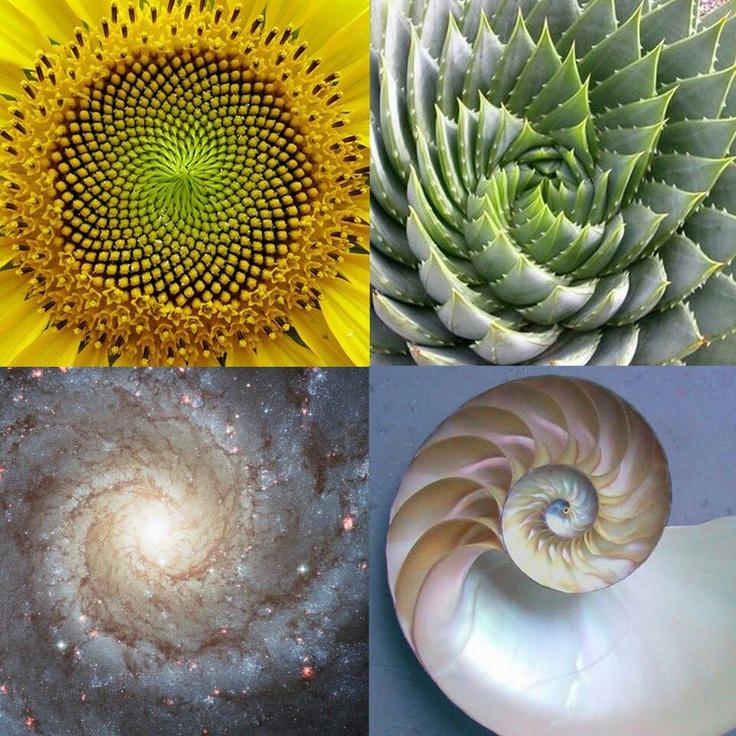
In mathematical terms, the sequence is defined by the recurrence relation
In mathematical terms, the sequence \(F(n)\) of Fibonacci numbers is defined by the recurrence relation
\[ F(n) = F(n-1) + F(n-2) \]
with initial values \(F(0) = 0\) and \(F(1) = 1\) .
Despite its simple definition, the Fibonacci sequence provides an ideal example for studying algorithmic optimization. Different implementations of the same recurrence can exhibit dramatically different performance characteristics.
Let’s examine nine approaches, starting with the most straightforward solution and gradually progressing to some surprisingly powerful techniques.
Solution 1 Lookup Table - 32 bit signed integers only
If we don’t need to solve very large values and are time-sensitive, we can calculate all values in advance.
This function will work strictly in the case that we’re dealing with \(32\) bit signed integers (which could be a constraint in languages like Java, C/C++, etc.)
The Fibonacci sequence grows very quickly. So fast, that only the first \(47\) Fibonacci numbers fit within the range of a \(32\) bit signed integer. This method requires only a quick list lookup to find the nth Fibonacci number, so it runs in constant time. Since the list is of fixed length, this method runs in constant space as well.1
2
3
4
5
6
7
8
9
10
11
12class Solution {
int[] fib_nums = {
0, 1, 1, 2, 3, 5, 8, 13, 21, 34, 55, 89, 144, 233, 377, 610, 987, 1597, 2584, 4181,
6765, 10946, 17711, 28657, 46368, 75025, 121393, 196418, 317811, 514229, 832040,
1346269, 2178309, 3524578, 5702887, 9227465, 14930352, 24157817, 39088169, 63245986,
102334155, 165580141, 267914296, 433494437, 701408733, 1134903170, 1836311903
};
public int fib(int n) {
return fib_nums[n];
}
};
Analysis
- Time Complexity: \(O(1)\)
- Space Complexity: \(O(1)\)
Solution 2 Recursion
A simple method that is a direct recursive implementation mathematical recurrence relation is given above.1
2
3
4
5
6
7
8//Fibonacci Series using Recursion
public static int fib(int n) {
if (n <= 1) {
return n;
}
return fib(n - 1) + fib(n - 2);
}
Analysis
- Time Complexity: \(O(\phi^n)\) , where \(\phi\) is the golden ratio (\(\phi \simeq 1.618 \dots\)).
If we count the number of calls that this algorithm makes for any n, we will find its runtime complexity.
Let \(T(n)\) refer to the number of calls to fib1 that are required to evaluate fib1(n).
When fib1(0) or fib1(1) is called, fib1 doesn’t make any additional recursive calls, so \(T(0)\) and \(T(1)\) must equal 1.
For any other n, when fib1(n) is called, fib1(n - 1) and fib1(n - 2) are also called.
So
\[ T(n) = 1 + T(n - 1) + T(n - 2) \]
Using more advanced mathematical techniques, like generating functions, one can solve the recurrence \(T\), and find that \(T\) scales as \(O(\phi)\) .
If the original recursion tree were to be implemented then this would have been the tree but now for n times the recursion function is called.
Original tree for recursion:1
2
3
4
5
6
7
8
9 fib(5)
/ \
fib(4) fib(3)
/ \ / \
fib(3) fib(2) fib(2) fib(1)
/ \ / \ / \
fib(2) fib(1) fib(1) fib(0) fib(1) fib(0)
/ \
fib(1) fib(0)
Optimized tree for recursion for code above:1
2
3
4
5fib(5)
fib(4)
fib(3)
fib(2)
fib(1)
- Space Complexity: \(O(n)\) if we consider the function call stack size, otherwise \(O(1)\) .
Solution 3 Dynamic Programming
We can avoid the repeated work done in Recursion solution by storing the Fibonacci numbers calculated so far.1
2
3
4
5
6
7
8
9
10
11
12
13
14
15
16
17// Dynamic Programming
public int fib(int n) {
/* Declare an array to store Fibonacci numbers. */
int f[] = new int[n + 1]; // 1 extra to handle case, n = 0
int i;
/* 0th and 1st number of the series are 0 and 1*/
f[0] = 1;
f[1] = 1;
for (i = 2; i <= n; i++) {
/* Add the previous 2 numbers in the series and store it */
f[i] = f[i - 1] + f[i - 2];
}
return f[n];
}
Analysis
- Time Complexity: \(O(n)\)
- Space Complexity: \(O(n)\)
Solution 4 DP using memoization(Top down approach)
We can avoid the repeated work done in Solution 2 Recursion by storing the Fibonacci numbers calculated so far. We just need to store all the values in an array.1
2
3
4
5
6
7
8
9
10
11
12
13
14
15
16
17
18
19
20
21
22
23
24
25
26// Initialize array of dp
public static int[] dp = new int[31];
public static int fib(int n) {
if (n <= 1) {
return n;
}
// Temporary variables to store values of fib(n-1) & fib(n-2)
int first, second;
if (dp[n - 1] != -1) {
first = dp[n - 1];
} else {
first = fib(n - 1);
}
if (dp[n - 2] != -1) {
second = dp[n - 2];
} else {
second = fib(n - 2);
}
// Memoization
return dp[n] = first + second;
}
Analysis
- Time Complexity: \(O(n)\)
- Space Complexity: \(O(n)\)
Solution 5 Iterative (Space Optimized Method 3)
We can optimize the space used in Solution 3 Dynamic Programming by storing the previous two numbers only because that is all we need to get the next Fibonacci number in series.
This solution is one of the simplest and most efficient algorithms on this list. This function has a loop that runs through n iterations before returning, and each iteration does constant work, making the algorithm run in \(O(n)\) time. This function doesn’t use any extra data structures, and it isn’t recursive, so we can say that it uses \(O(1)\) space.1
2
3
4
5
6
7
8
9
10
11
12
13
14
15// Fibonacci Series using Space Optimized Method
class Solution {
public int fib(int n) {
if (n < 2) {
return n;
}
int p = 0, q = 0, r = 1;
for (int i = 2; i <= n; ++i) {
p = q;
q = r;
r = p + q;
}
return r;
}
}
Analysis
- Time Complexity: \(O(n)\)
- Space Complexity: \(O(1)\)
Solution 6 Recurrence Matrix
This is the most mathematical solution, and it requires some basic understanding of matrix multiplication.
Consider the following matrix \(M\):
\[ M = \begin{bmatrix} 1 & 1 \\ 1 & 0 \\ \end{bmatrix} \]
If \(f_{i-1}\) and \(f_{i-2}\) are the \(i-1\)th and the \(i-2\)th Fibonacci numbers, the following matrix product can give us the ith Fibonacci number \(f_{i}\):
\[ M * \begin{bmatrix} f_{i - 2} \\ f_{i - 1} \end{bmatrix} = \begin{bmatrix} f_{i - 1} \\ f_{i - 1} + f_{i - 2} \end{bmatrix} = \begin{bmatrix} f_{i - 1} \\ f_{i} \end{bmatrix} \]
Using this property of \(M\), one can find \(f_{n}\) by computing the product
\[ M^n \cdot \begin{bmatrix} f_0 \\ f_1 \end{bmatrix} = M^n \cdot \begin{bmatrix} 0 \\ 1 \end{bmatrix} \]
and returning the first element of the vector.1
2
3
4
5
6
7
8
9
10
11
12
13
14
15
16
17
18
19
20
21
22
23
24
25
26
27
28
29
30
31
32
33
34
35
36
37
38class Solution {
public static int fib(int n) {
int F[][] = new int[][]{{1, 1}, {1, 0}};
if (n == 0) {
return 0;
}
power(F, n - 1);
return F[0][0];
}
/* Helper function that multiplies 2 matrices F and M of size 2*2, and
puts the multiplication result back to F[][] */
public static void multiply(int F[][], int M[][]) {
int x = F[0][0] * M[0][0] + F[0][1] * M[1][0];
int y = F[0][0] * M[0][1] + F[0][1] * M[1][1];
int z = F[1][0] * M[0][0] + F[1][1] * M[1][0];
int w = F[1][0] * M[0][1] + F[1][1] * M[1][1];
F[0][0] = x;
F[0][1] = y;
F[1][0] = z;
F[1][1] = w;
}
/* Helper function that calculates F[][] raise to the power n and puts the
result in F[][]
Note that this function is designed only for fib() and won't work as general
power function */
public static void power(int F[][], int n) {
int i;
int M[][] = new int[][]{{1, 1}, {1, 0}};
// n - 1 times multiply the matrix to {{1,0},{0,1}}
for (i = 2; i <= n; i++) {
multiply(F, M);
}
}
}
Analysis
- Time Complexity: \(O(n)\)
- Space Complexity: \(O(1)\)
Solution 7 Fast Matrix Power(Optimized Method 6)
The Solution 6 Recurrence Matrix can be optimized to work in \(O(logn)\) time complexity. We can do recursive multiplication to get \(\texttt{power}(M, n)\) in the previous method (Similar to the optimization done in this post).
The key here is to compute \(M^n\) using the successive square method. Using this algorithm, \(M^n\) is computed in \(O(logn)\) time(Note that for a fixed matrix size, the matrix muliplication algorithm takes a constant amount of time).
Then, \(M^n\) is multiplied by \(\begin{bmatrix} 0 \\ 1 \end{bmatrix}\), and the top elemen of the product is returned.
This algorithm uses \(O(logn)\) to compute \(M^n\), and constant space, as the intermediary matricies can be reclaimed by the garbage collecter.1
2
3
4
5
6
7
8
9
10
11
12
13
14
15
16
17
18
19
20
21
22
23
24
25
26
27
28
29
30
31
32class Solution {
public int fib(int n) {
if (n < 2) {
return n;
}
int[][] q = {{1, 1}, {1, 0}};
int[][] res = pow(q, n - 1);
return res[0][0];
}
public int[][] pow(int[][] a, int n) {
int[][] ret = {{1, 0}, {0, 1}};
while (n > 0) {
if ((n & 1) == 1) {
ret = multiply(ret, a);
}
n >>= 1;
a = multiply(a, a);
}
return ret;
}
public int[][] multiply(int[][] a, int[][] b) {
int[][] c = new int[2][2];
for (int i = 0; i < 2; i++) {
for (int j = 0; j < 2; j++) {
c[i][j] = a[i][0] * b[0][j] + a[i][1] * b[1][j];
}
}
return c;
}
}
Analysis
- Time Complexity: \(O(logn)\).
- Space Complexity: \(O(logn)\), if we consider the function call stack size, otherwise \(O(1)\).
Solution 8 \(O(\log n)\) Time
Below is one more interesting recurrence formula that can be used to find nth Fibonacci number in \(O(\log n)\) time.
- If \(n\) is even then \(k = \dfrac{n}{2}\) :
\[ F(n) = [2F(k-1) + F(k)] \cdot F(k) \]
- If \(n\) is odd then \(k = \dfrac{n + 1}{2}\) :
\[ F(n) = F(k)F(k) + F(k-1)F(k-1) \]
How does this formula work?
The formula can be derived from above matrix equation.
\[ A^n = \begin{pmatrix} F_{n+1}, &F_n \\ F_n,&F_{n-1} \end{pmatrix} \]
Taking determinant on both sides, we get:
\[ (-1)^n = F_{n+1}F_{n-1} - F_n^2 \]
Moreover, since \(A^nA^m = A^{n+m}\) for any square matrix \(A\) , the following identities can be derived (they are obtained form two different coefficients of the matrix product)
\[ F_mF_n + F_{m-1}F_{n-1} = F_{m+n-1} \tag{8.1} \]
By putting \(n = n + 1\) in equation (8.1),
\[ F_mF_{n+1} + F_{m-1}F_n = F_{m+n} \tag{8.2} \]
Putting \(m = n\) in equation (8.1).
\[ F_{2n-1} = F_n^2 + F_{n-1}^2 \]
Putting \(m = n\) in equation(8.2)
By putting: \(F_{n+1} = F_n + F_{n-1}\)
\[ F_{2n} = (F_{n-1} + F_{n+1})Fn = (2F_{n-1} + F_n)F_n \]
To get the formula to be proved, we simply need to do the following
If \(n\) is even, we can put \(k = \dfrac{n}{2}\)
If \(n\) is odd, we can put \(k = \dfrac{n+1}{2}\)
Below is the implementation of above idea.1
2
3
4
5
6
7
8
9
10
11
12
13
14
15
16
17
18
19
20
21
22
23
24
25
26public static int MAX = 1000;
public static int f[];
// Returns n'th fibonacci number using
// table f[]
public static int fib(int n) {
if (n == 0) {
return 0;
}
if (n == 1 || n == 2) {
return (f[n] = 1);
}
// If fib(n) is already computed
if (f[n] != 0) {
return f[n];
}
int k = (n & 1) == 1 ? (n + 1) / 2 : n / 2;
// Applying above formula [Note value n&1 is 1 if n is odd, else 0.
f[n] = (n & 1) == 1 ? (fib(k) * fib(k) + fib(k - 1) * fib(k - 1)) : (2 * fib(k - 1) + fib(k)) * fib(k);
return f[n];
}
Analysis
- Time Complexity: \(O(\log n)\) as we divide the problem to half in every recursive call.
- Space Complexity: \(O(\log n)\) .
Solution 9 Math Formula
We first look at the equation:
\[ F(n) = F(n-1) + F(n-2) \tag{9.1} \]
To solve (9.1) for the Fibonacci numbers, we first look at the equation
\[ x_{n+1} = x_n + x_{n-1} \tag{9.2} \]
This equation is called a second-order, linear, homogeneous difference equation with constant coefficients, and its method of solution closely follows that of the analogous differential equation.
Our idea is to guess the general form of a solution, find two such solutions, and then multiply these solutions by unknown constants and add them. This results in a general solution to (9.2), and one can then solve by satisfying the specified initial values.
To begin, we guess the form of the solution as
\[ x_n = \lambda^n \tag{9.3} \]
where \(λ\) is an unknown constant.
Substitution of this guess into the equation, results in:
\[ \lambda^{n+1} = \lambda^n + \lambda^{n-1} \]
or upon division by \(\lambda^{n-1}\) and rearrangement of terms,
\[ \lambda^2 - \lambda - 1 = 0 \]
Use of the quadratic formula yields two roots, both of which are already familiar. We have:
\[ \lambda_1 = \frac{1 + \sqrt{5}}{2} \]
\[ \lambda_2 = \frac{1 - \sqrt{5}}{2} \]
We have thus found two independent solutions to (9.2) of the form (9.3), and we can now use these two solutions to find a solution to (9.1). Multiplying the solutions by constants and adding them, we obatin:
\[ F(n) = c_1 \lambda_1^n + c_2 \lambda_2^n \]
which must satisfy the initial values \(F(0) = 1, \ F(1) = 1\) .
Application of the values for \(F0\) and \(F1\) results in the system of equations given by
\[ c_1 + c_2 = 0 \]
\[ c_1 \lambda_1 - c_2 \lambda_2 = 1 \]
we can solve for \(c_1\) and \(c_2\) to obtain:
\[ c_1 = \frac{1}{\sqrt{5}},\quad c_2 = -\frac{1}{\sqrt{5}}. \]
then derives the surprising formula:
\[ F(n) = \frac{1}{\sqrt{5}} \left[ \left( \frac{1+\sqrt{5}}{2} \right)^{n} - \left( \frac{1 - \sqrt{5}}{2} \right)^{n} \right] \]
known as Binet’s formula.
In this method we directly implement the formula for nth term in the fibonacci series.1
2
3
4
5
6
7class Solution {
public int fib(int n) {
double sqrt5 = Math.sqrt(5);
double fibN = Math.pow((1 + sqrt5) / 2, n) - Math.pow((1 - sqrt5) / 2, n);
return (int) Math.round(fibN / sqrt5);
}
}
Analysis
- Time Complexity: \(O(\log n)\) , this is because calculating \(phi^n\) takes \(\log n\) time
- Space Complexity: \(O(1)\) .
References
All suggestions are welcome. If you have any query or suggestion please comment below. Please upvote👍 if you like💗 it. Thank you:-)
Explore More Leetcode Solutions. 😉😃💗